The federal Emergency Planning and Community Right-to-Know Act — a 27 year old program that aims to alert the public to the presence of hazardous chemicals — is flawed in many states due to lax reporting and oversight, according to a Reuters investigation.
Under the law, public and private facilities must issue an inventory of any potentially hazardous chemicals they have on site. The inventory, known as a Tier II report, is then filed with state, county and local emergency officials and is supposed to be made publicly available so that emergency services and local residents can make appropriate emergency plans.
A new educational center to help train water professionals will be opening in West Sacramento, as part of the California-Nevada Section of the American Water Works Association (CA-NV AWWA).
The CA-NV AWWA will be opening its new educational center in West Sacramento, located directly off the I-80 freeway. The new facility will provide drinking water professionals additional opportunities for CA-NV AWWA education and training that had been less available in the region until now.
“This is another big step for the California-Nevada Section on our path to provide more of the highest quality water knowledge that is the hallmark of AWWA. With this new center, we can schedule classes more often and on more topics than ever before,” said Dr. Timothy Worley, executive director of CA-NV AWWA.
Classes began on Friday, June 21, 2013, with the Backflow Refresher Workshop that will utilize an indoor backflow laboratory. The workshop was a memorable event bringing to fruition the vision of a West Sacramento center where all water industry professionals in the region can take advantage of the current, relevant, and innovative education and certification programs CA-NV AWWA offers.
CA-NV AWWA, has released a schedule of classes for the year. Registration is open for the upcoming Backflow Refreshers, Backflow Courses, Water Distribution (D2-D5) Reviews, Water Treatment (T1-T4) Reviews and Water Quality & Regulations Workshops.
A public ribbon cutting ceremony and an open house for the West Sacramento Training Center is planned for July 18, 2013 at 4:00pm.
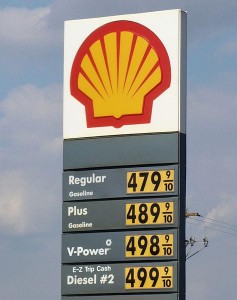
Pump prices have the ability to make or break an average American’s day, month, or year. But while gasoline stations fight over tenths of cents to tempt your tank, electric vehicle “plug prices” have remained a mystery – until now. A new tool reveals all, and the results are astonishing. Let’s take a look to see whether pump prices or plug prices are the real pocket pinchers.
Pump vs. plug
The Department of Energy unveiled its “eGallon calculator” this month, a shockingly simple tool to compare state-specific pump prices to plug prices. While gas prices scream at us from street signs, electric vehicle driving costs are nowhere to be found. eGallon changes all that, opening up information for consumers to make cost-conscious decisions about what to drive.
Source: Wikimedia Commons
Looking beneath national numbers, eGallon’s data are state-specific and constantly refreshing. With the cheapest gas prices around, South Carolina’s $3.41 per gas gallon is 3.15 times its $1.08 electric equal. And Hawaii’s most expensive electricity ($3.69 per gallon) still manages to squeeze under gasoline’s $3.74. Using mileage data for the five top-selling electric vehicles in 2012 – Tesla‘s (NASDAQ: TSLA) Model S, General Motors‘ (NYSE: GM) Chevy Volt, Nissan‘s Leaf, Ford‘s Focus, and BMW‘s ActiveE – the number cruncher compares these vehicles’ costs to a gasoline car that averages 28.2 miles per gallon. The result? On average, it costs around three times less per gallon ($1.14) to put the pedal to the metal in an electric vehicle versus a gasoline-powered vehicle.
A bit of historical perspective points to another win for electric expenditures. While pump prices can spike overnight with erratic oil, regulated utilities keep electricity prices slow and steady through thick and thin.
Source: Energy.gov
Electricity also offers a more diverse generation portfolio, creating opportunities for environmental efficiency and energy independence. And while this isn’t currently the case with coal-centric utilities or imported energy, it’s a bigger basket to choose from than anything traditional fuels have on tap.
Beyond the pump
Critics will argue that pump prices aren’t the only costs – and they’re right. Beyond the purchase price premium, electric vehicles can be more expensive in many ways. For starters, electric batteries don’t last forever. Chevy’s Volt comes with an eight-year warranty, and replacements currently clock in around $4,500. If you need a quick charge for your Tesla vehicle and can’t make it to one of the automakers’ eight “supercharger” stations, go ahead and tack on $1,200 for a faster-charging home kit.
But battery technology is rapidly improving, and a new power pack eight years from now may provide magnitudes more of power at a fraction of the cost. Likewise, Tesla Motors has big plans for powering its rapidly growing fleet of vehicles. The electric-auto maker is tripling its stations this summer, with a whopping 200 planned for 2015.
Source: Teslamotors.com
Is gas a goner?
Gasoline isn’t going anywhere. But for the first time, consumers have a concrete comparison point for their daily commute. eGallon is exactly what America needs to put things in perspective, allowing drivers everywhere to now make more data-driven decisions on their next vehicle purchase.
WASHINGTON — The U.S. Environmental Protection Agency (EPA) is inviting small businesses, governments, and not-for-profit organizations to participate as Small Entity Representatives (SERs) for a Small Business Advocacy Review (SBAR) Panel. This panel will focus on the agency’s review of its New Source Performance Standards (NSPS) for municipal solid waste landfills.
The Clean Air Act requires EPA to review new source performance standards every eight years and revise them if necessary. EPA is under a court-ordered deadline to complete its review and propose how to address the results of that review by Feb. 4, 2014 and to take final action by Dec. 17, 2014.
The panel will include federal representatives from the Small Business Administration (SBA), the Office of Management and Budget (OMB), and EPA. The panel members ask a selected group of SERs to provide advice and recommendations on behalf of their company, community, or organization to inform the panel members about the potential impacts of the proposed rule on small entities.
EPA seeks self-nominations directly from the small entities that may be subject to the rule requirements. Other representatives, such as trade associations that exclusively or at least primarily represent potentially regulated small entities, may also serve as SERs.
Self-nominations may be submitted through the link below and must be received by July 5, 2013.
Municipal solid waste landfills are disposal facilities in or on land for household waste. These landfills may receive certain other types of waste, such as non-hazardous sludge and commercial solid waste. Emissions from municipal solid waste landfills, known as “landfill gas,” occur from decomposition of wastes.
On May 24, 2013, the Bureau of Land Management (BLM) published a supplemental notice of proposed rulemaking entitled Oil and Gas; Well Stimulation, Including Hydraulic Fracturing, on Federal and Indian Lands. This supplemental notice relates to the proposed rulemaking published on May 11, 2012. BLM seeks additional comment on the supplemental notice of proposed rulemaking which significantly revised the original proposed rule. Comments on the supplemental proposed rule are due by June 24, 2013.
A quick and inexpensive way for restaurants to save water and the energy needed to heat water is to install new pre-rinse spray valves in their dishwashing areas, according to the Clean Energy Resource Teams (CERTs), a group affiliated with the University of Minnesota Regional Sustainable Development Partnerships & Extension.
The pace of change in technology today is unrelenting. Electronics are outdated in the blink of an eye, consigned to trash, or e-trash. Today’s consumer is obsessed with new technology; there are over 300 million computers and one billion cell phones produced every year. With old electronics becoming redundant, inefficient, and obsolete, we are quickly replacing them with new ones. But what happens to old electronics or e-waste? Electronic waste is the fastest growing stream of global waste and will continue to be dumped in developing countries least equipped to deal with it properly.
E-waste, or electronic waste, refers to all electronic devices, surplus, damaged or obsolete, which have been discarded by their original owners. According to a United Nations estimate, the world produces up to 50 million tons of e-waste per year. This global mountain of waste is expected to continue growing 8% per year, indefinitely. With increased access to information technology, there are also challenges in managing electronic products at their end-of-use. Continue reading Leave no e-trace
A study conducted by a research team at the University of Washington, titled Targeting 100!, identifies a process for newly constructed hospitals that integrates architectural, mechanical and central plant systems to reduce energy consumption by an average of 62 percent.
The biggest breakthrough comes from addressing the reheating of centrally-cooled air, which is the largest contributor to wasted energy in a hospital, representing more than 40 percent of annual heating energy usage. By combining energy-reduction design solutions – including sun and daylight shading controls, vacant room sensors, outdoor air supply with heat recovery systems, modified air delivery systems, thermal energy storage, and improved air-tightness and high insulation values in windows and walls – a newly constructed, code-compliant hospital in the range of Targeting 100! saves between $500,000 and $800,000 a year in energy costs. Continue reading Hospitals Can Reduce Energy 62%